
Healthy Eating Tips for Busy Professionals: Simple Ways to Stay Healthy and Productive
Discover practical healthy eating tips for busy professionals who want to stay energized, focused, and productive.
HEALTH
Muhammad Umaish
7/19/20264 min read
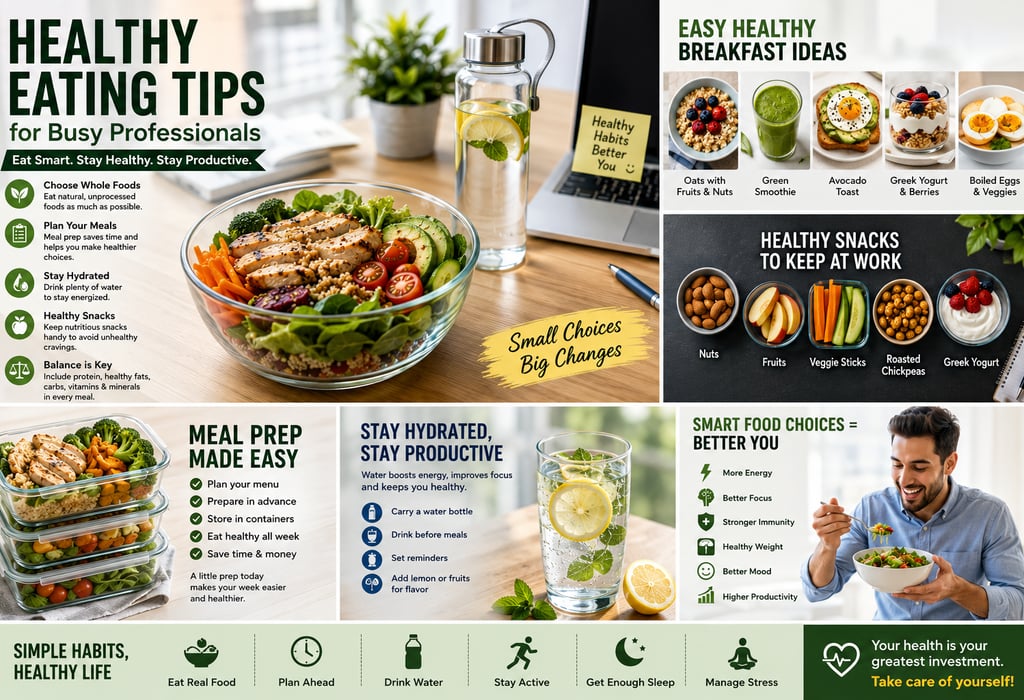
Healthy Eating Tips for Busy Professionals: Stay Fit Without Sacrificing Your Schedule
Introduction
Maintaining a healthy diet can be challenging when your schedule is packed with meetings, deadlines, and long working hours. Many professionals skip meals, rely on fast food, or consume too much caffeine to stay productive. While these habits may seem convenient, they can lead to fatigue, poor concentration, weight gain, and long-term health problems.
The good news is that eating healthy doesn't require spending hours in the kitchen. With a little planning and smart food choices, you can fuel your body, improve your energy levels, and stay productive throughout the day.
This guide shares practical and easy-to-follow healthy eating tips designed specifically for busy professionals.
Why Healthy Eating Matters
Eating a balanced diet is crucial for keeping both your body and mind healthy. Proper nutrition helps you:
• Stay energized throughout the workday
• Improve concentration and memory
• Strengthen your immune system
• Maintain a healthy weight
• Reduce stress and fatigue
• Lower the risk of diabetes, heart disease, and high blood pressure
Healthy eating isn't just about looking good—it's about feeling your best and performing at your highest level.
1. Never Skip Breakfast
Breakfast is often called the most important meal of the day for a reason. It jumpstarts your metabolism and provides the energy your body needs after an overnight fast.
Healthy Breakfast Ideas
• Oatmeal topped with fresh fruit and nuts
• Greek yogurt with berries and granola
• Whole-grain toast with avocado and eggs
• Smoothie made with spinach, banana, and protein
• Peanut butter on whole-grain bread
A nutritious breakfast helps improve focus and reduces unhealthy snacking later in the day.
2. Plan Your Meals Ahead
Meal planning saves time, reduces stress, and prevents unhealthy food choices.
Meal Prep Tips
• Prepare meals during the weekend.
• Cook extra portions for lunch.
• Store meals in airtight containers.
• Keep healthy snacks ready.
• Create a weekly grocery list.
Even preparing meals for two or three days can make a significant difference.
3. Keep Healthy Snacks at Work
Instead of reaching for chips or sugary snacks, keep nutritious options nearby.
Best Healthy Office Snacks
• Mixed nuts
• Fresh fruit
• Carrot or cucumber sticks
• Roasted chickpeas
• Protein bars with low sugar
• Greek yogurt
• Unsalted popcorn
Healthy snacks keep your energy stable and reduce afternoon cravings.
4. Drink Plenty of Water
Many people mistake thirst for hunger.
Aim for 2–3 liters of water daily, depending on your activity level and climate.
Simple ways to drink more water:
• Carry a reusable water bottle.
• Set reminders on your phone.
• Drink a glass before every meal.
• Add lemon, cucumber, or mint for flavor.
Proper hydration improves focus, mood, and overall health.
5. Choose Balanced Meals
Each meal should contain a balance of:
• Lean protein (chicken, fish, eggs, beans)
• Whole grains (brown rice, oats, quinoa)
• Healthy fats (avocados, nuts, olive oil)
• Vegetables
• Fruits
A balanced plate provides long-lasting energy and keeps you full longer.
6. Avoid Processed Foods
Watch out for highly processed foods, as they are typically packed with unhealthy fats, sodium, and added sugars.
Try to limit:
• Sugary drinks
• Packaged snacks
• Fast food
• Candy
• Fried foods
• Processed meats
Instead, choose whole, natural foods whenever possible.
7. Control Portion Sizes
Eating healthy also means eating the right amount.
Helpful tips:
• Use smaller plates.
• Eat slowly.
• Stop eating when you're comfortably full.
• Avoid eating while working at your desk.
Mindful eating prevents overeating and improves digestion.
8. Reduce Sugar Intake
Too much sugar causes energy crashes and increases the risk of obesity and diabetes.
Replace sugary foods with:
• Fresh fruit
• Unsweetened yogurt
• Dark chocolate (in moderation)
• Homemade smoothies
Always read nutrition labels before buying packaged foods.
9. Eat Lunch Away from Your Desk
Working while eating often leads to overeating and poor digestion.
Take 20–30 minutes to enjoy your meal without distractions. Taking quick breathers throughout the day does wonders for your stress levels and actually helps you get more done.
10. Make Healthier Choices When Eating Out
Busy professionals often eat at restaurants.
Choose healthier options by:
• Ordering grilled instead of fried foods.
• Choosing salads with lean protein.
• Requesting sauces on the side.
• Drinking water instead of sugary beverages.
• Avoiding oversized portions.
Minor decisions accumulate over time, ultimately generating a significant long-term impact.
11. Don't Depend on Caffeine
Coffee can boost alertness, but excessive caffeine may lead to anxiety, poor sleep, and dehydration.
Try replacing some cups of coffee with:
• Green tea
• Herbal tea
• Water
• Fresh fruit for natural energy
Moderation is key.
12. Keep Healthy Foods Easily Accessible
If healthy foods are convenient, you're more likely to eat them.
Stock your kitchen with:
• Fresh vegetables
• Fruits
• Eggs
• Oats
• Whole-grain bread
• Nuts
• Yogurt
• Frozen vegetables for quick meals
Avoid keeping unhealthy snacks within easy reach.
Sample One-Day Healthy Meal Plan
Breakfast
Oatmeal with blueberries, almonds, and a boiled egg.
Mid-Morning Snack
Apple with a handful of almonds.
Lunch
Grilled chicken, brown rice, and mixed vegetables.
Afternoon Snack
Greek yogurt with berries.
Dinner
Baked salmon with quinoa and steamed broccoli.
Evening Snack
A banana or a few walnuts if you're hungry.
Common Healthy Eating Mistakes
Many professionals unintentionally develop unhealthy habits, such as:
• Skipping meals
• Eating too quickly
• Drinking too many sugary beverages
• Relying on fast food
• Ignoring portion sizes
• Snacking out of boredom instead of hunger
Identifying these behavioral patterns is the foundational step in transitioning to healthier alternatives.
Benefits of Healthy Eating for Professionals
Following a balanced diet can lead to:
• Higher productivity
• Better concentration
• Improved mood
• Stable energy levels
• Better sleep quality
• Stronger immunity
• Reduced stress
• Lower healthcare costs over time
Healthy employees often perform better and experience greater job satisfaction.
Frequently Asked Questions (FAQs)
Is meal prep necessary?
No, but preparing even a few meals in advance can save time and help you avoid unhealthy choices.
What's the healthiest office snack?
Fresh fruit, mixed nuts, Greek yogurt, roasted chickpeas, and vegetable sticks are excellent options.
How much water should I drink each day?
Most adults benefit from around 2–3 liters of water daily, though individual needs vary.
Can I eat healthy if I travel frequently?
Yes. Choose grilled dishes, salads, fruit, yogurt, and water whenever possible, and carry healthy snacks for convenience.
Is coffee unhealthy?
Coffee can be part of a healthy diet when consumed in moderation. Limit added sugar and cream, and avoid excessive caffeine intake.
Conclusion
Healthy eating doesn't have to be complicated, even with a demanding career. Small, consistent habits—such as planning meals, choosing nutritious snacks, staying hydrated, and eating balanced meals—can make a significant difference in your energy, productivity, and long-term health.
Remember, lasting results come from consistency rather than perfection. Start with one or two healthy changes today, and build better habits over time. Your body and mind will thank you.